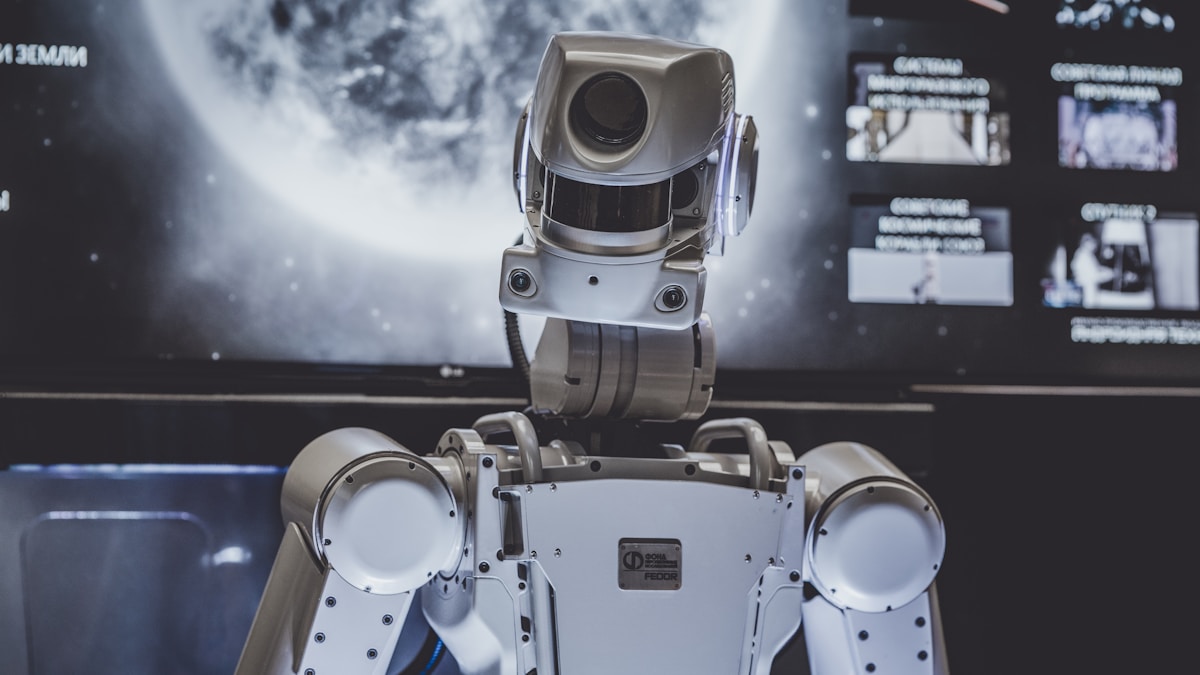
Introduction to Machine Learning
Machine Learning (ML) is a subset of artificial intelligence that enables computers to learn and improve from experience without being explicitly programmed. It's transforming industries from healthcare to finance, making systems smarter and more efficient.
Types of Machine Learning
Supervised Learning
Learning from labeled data:
- Training data includes input-output pairs
- Algorithm learns to map inputs to outputs
- Examples: Classification, Regression
- Use cases: Email spam detection, price prediction
Unsupervised Learning
Finding patterns in unlabeled data:
- No predefined labels or categories
- Algorithm discovers hidden patterns
- Examples: Clustering, Dimensionality reduction
- Use cases: Customer segmentation, anomaly detection
Reinforcement Learning
Learning through trial and error:
- Agent learns by interacting with environment
- Receives rewards or penalties
- Optimizes for maximum cumulative reward
- Use cases: Game playing, robotics, autonomous vehicles

Key ML Algorithms
Linear Regression
Predicts continuous values based on linear relationships.
Logistic Regression
Binary classification algorithm for yes/no predictions.
Decision Trees
Tree-like model for classification and regression tasks.
Random Forest
Ensemble of decision trees for improved accuracy.
Neural Networks
Inspired by human brain, excellent for complex patterns.
Support Vector Machines (SVM)
Finds optimal boundary between classes.

The ML Workflow
1. Data Collection
- Gather relevant data from various sources
- Ensure data quality and quantity
- Consider data privacy and ethics
2. Data Preprocessing
- Clean and handle missing values
- Normalize or standardize features
- Encode categorical variables
- Split into training and testing sets
3. Model Selection
- Choose appropriate algorithm
- Consider problem type and data characteristics
- Balance complexity and interpretability
4. Training
- Feed training data to the model
- Adjust parameters to minimize error
- Use validation set to tune hyperparameters
5. Evaluation
- Test on unseen data
- Measure accuracy, precision, recall
- Analyze confusion matrix
- Check for overfitting or underfitting
6. Deployment
- Integrate model into production
- Monitor performance
- Retrain periodically with new data

Popular ML Libraries and Frameworks
Python Libraries
- Scikit-learn: General-purpose ML library
- TensorFlow: Deep learning framework by Google
- PyTorch: Deep learning framework by Facebook
- Keras: High-level neural networks API
- Pandas: Data manipulation and analysis
- NumPy: Numerical computing
Real-World Applications
- Healthcare: Disease diagnosis, drug discovery
- Finance: Fraud detection, algorithmic trading
- E-commerce: Recommendation systems, price optimization
- Transportation: Autonomous vehicles, route optimization
- Marketing: Customer segmentation, churn prediction
- Manufacturing: Predictive maintenance, quality control

Getting Started with ML
Prerequisites
- Programming skills (Python recommended)
- Basic statistics and probability
- Linear algebra fundamentals
- Calculus basics
Learning Path
- Start with online courses (Coursera, edX)
- Practice with Kaggle competitions
- Build personal projects
- Read research papers
- Join ML communities
Common Challenges
- Overfitting: Model performs well on training but poorly on new data
- Underfitting: Model too simple to capture patterns
- Data Quality: Garbage in, garbage out
- Feature Engineering: Selecting relevant features
- Computational Resources: Training can be resource-intensive

Future of Machine Learning
- AutoML for automated model selection
- Explainable AI for transparency
- Edge ML for on-device processing
- Federated learning for privacy
- Quantum machine learning
Conclusion
Machine Learning is revolutionizing technology and creating new possibilities across industries. Start with the basics, practice consistently, and stay curious. The field is constantly evolving, offering exciting opportunities for those willing to learn and experiment.